Browse articles, poetry, essays, and intellectual thoughts tagged with #agriculture. All content is published directly by creators on the Litora network.
Remote Sensing: Uses its own energy source and records the reflected signal. Example: RADAR and LiDAR.
COMPONENTS
Energy source: Sun or artificial energy.
Atmosphere: Medium through which energy travels.
Target: Object or area being studied.
Sensor: Detects reflected or emitted energy.
Data processing: Converts collected data into useful information.
Interpretation: Analyses the information for decision-making.
APPLICATION IN AGRICULTURE
*Crop health monitoring.
Identification of crop diseases and nutrient deficiencies.
Soil moisture assessment.
Drought monitoring.
Crop acreage estimation.
Yield prediction.
Irrigation management.
Flood and disaster assessment.
ADVANTAGES:
Covers large geographical areas.
Saves time and labour.
Provides repeated observations.
Helps in precision agriculture.
Supports better farm management.
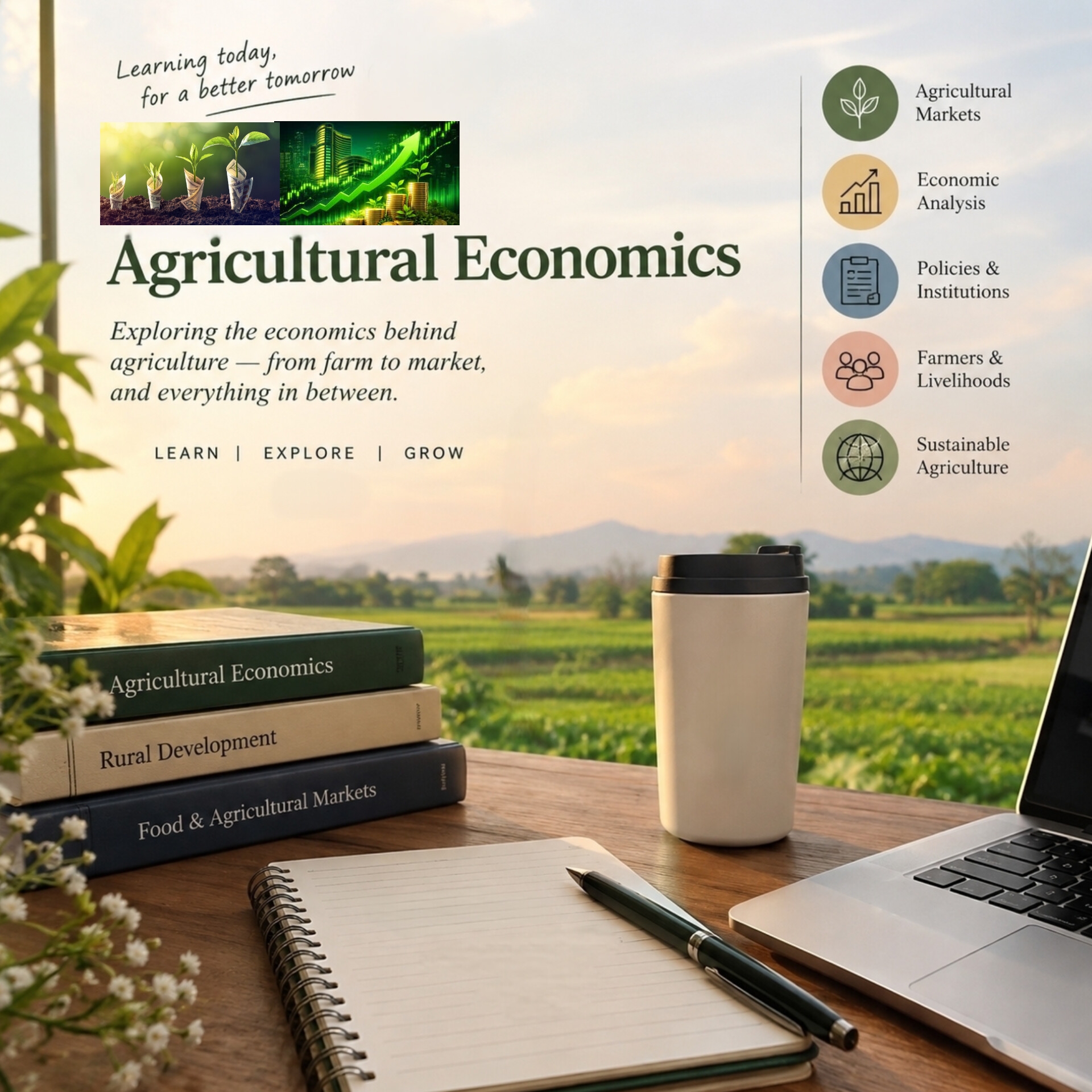
AGRICULTURAL ECONOMICS
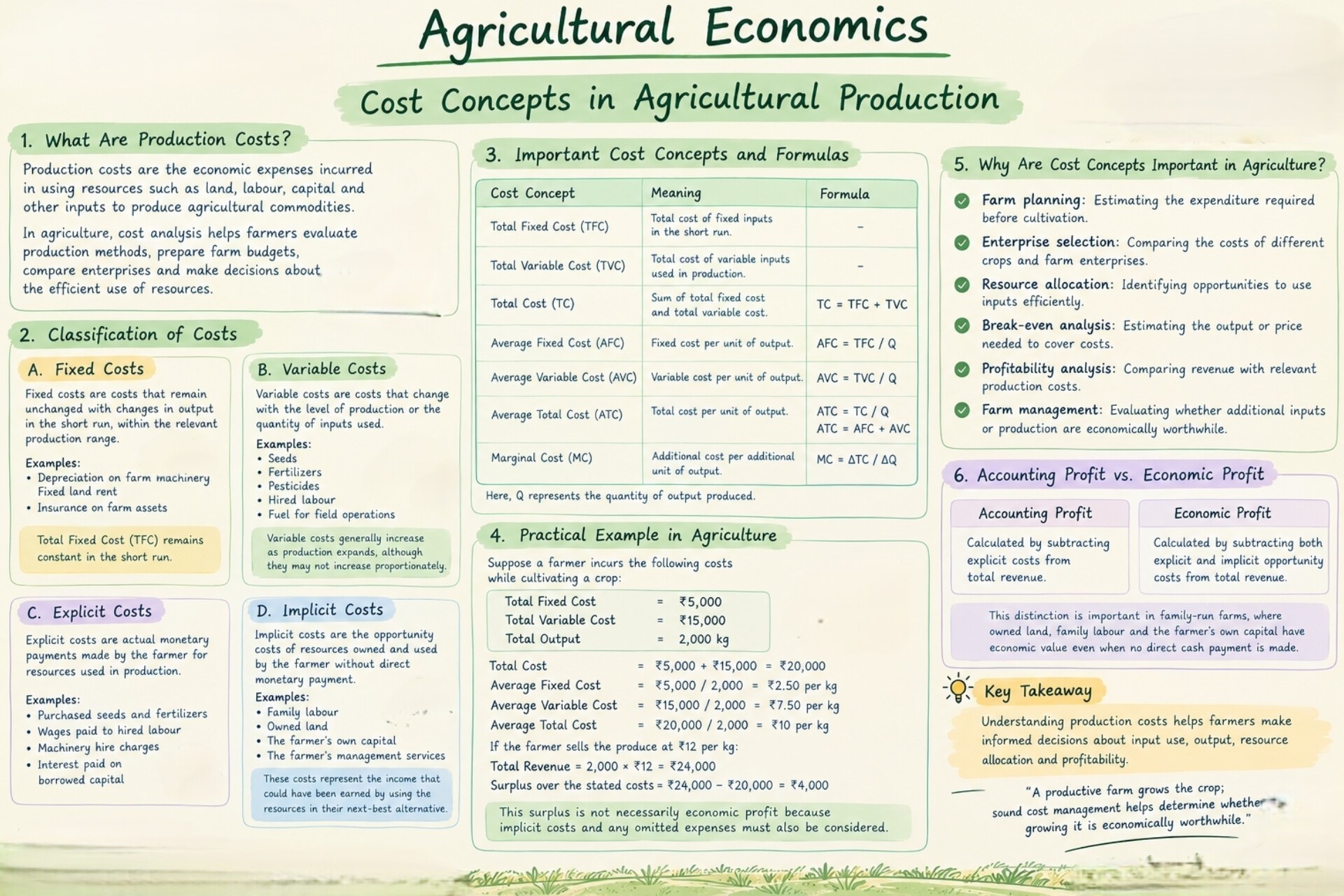
COST CONCEPTS IN AGRICULTURAL PRODUCTION
1. What Are Production Costs?
Production costs are the economic expenses incurred in using resources such as land, labour, capital and other inputs to produce agricultural commodities.
In agriculture, cost analysis helps farmers evaluate production methods, prepare farm budgets, compare enterprises and make decisions about the efficient use of resources.
2. Classification of Costs
A. Fixed Costs
Fixed costs are costs that remain unchanged with changes in output in the short run, within the relevant production range.
Examples:
- Depreciation on farm machinery
- Fixed land rent
- Insurance on farm assets
Total Fixed Cost (TFC) remains constant in the short run, even when output changes.
B. Variable Costs
Variable costs are costs that change with the level of production or the quantity of inputs used.
Examples:
- Seeds
- Fertilizers
- Pesticides
- Hired labour
- Fuel for field operations
Variable costs generally increase as production expands, although they may not increase proportionately.
C. Explicit Costs
Explicit costs are actual monetary payments made by the farmer for resources used in production.
Examples:
- Purchased seeds and fertilizers
- Wages paid to hired labour
- Machinery hire charges
- Interest paid on borrowed capital
D. Implicit Costs
Implicit costs are the opportunity costs of resources owned and used by the farmer without direct monetary payment.
Examples:
- Family labour
- Owned land
- The farmer's own capital
- The farmer's management services
These costs represent the income that could have been earned by using the resources in their next-best alternative.
3. Important Cost Concepts and Formulas
Total Fixed Cost (TFC): The total cost of fixed inputs in the short run.
Total Variable Cost (TVC): The total cost of variable inputs used in production.
Total Cost (TC): The sum of total fixed cost and total variable cost.
TC = TFC + TVC
Average Fixed Cost (AFC): Fixed cost per unit of output.
AFC = TFC / Q
Average Variable Cost (AVC): Variable cost per unit of output.
AVC = TVC / Q
Average Total Cost (ATC): Total cost per unit of output.
ATC = TC / Q
ATC = AFC + AVC
Marginal Cost (MC): The additional cost incurred by producing one more unit of output.
MC = Change in TC / Change in Q
Here, Q represents the quantity of output produced.
4. Practical Example in Agriculture
Suppose a farmer incurs the following costs while cultivating a crop:
Total Fixed Cost = ₹5,000
Total Variable Cost = ₹15,000
Total Output = 2,000 kg
Total Cost = ₹5,000 + ₹15,000 = ₹20,000
Average Fixed Cost = ₹5,000 / 2,000 = ₹2.50 per kg
Average Variable Cost = ₹15,000 / 2,000 = ₹7.50 per kg
Average Total Cost = ₹20,000 / 2,000 = ₹10 per kg
If the farmer sells the produce at ₹12 per kg:
Total Revenue = 2,000 × ₹12 = ₹24,000
Surplus over the stated costs = ₹24,000 − ₹20,000 = ₹4,000
This surplus is not necessarily economic profit because implicit costs and any omitted expenses must also be considered.
5. Why Are Cost Concepts Important in Agriculture?
- Farm planning: Estimating the expenditure required before cultivation.
- Enterprise selection: Comparing the costs of different crops and farm enterprises.
- Resource allocation: Identifying opportunities to use inputs efficiently.
- Break-even analysis: Estimating the output or price needed to cover costs.
- Profitability analysis: Comparing revenue with relevant production costs.
- Farm management: Evaluating whether additional inputs or production are economically worthwhile.
6. Accounting Profit vs. Economic Profit
Accounting profit is calculated by subtracting explicit costs from total revenue.
Economic profit is calculated by subtracting both explicit and implicit opportunity costs from total revenue.
This distinction is important in family-run farms, where owned land, family labour and the farmer's own capital have economic value even when no direct cash payment is made.
KEY TAKEAWAY
Understanding production costs helps farmers make informed decisions about input use, output, resource allocation and profitability.
“A productive farm grows the crop; sound cost management helps determine whether growing it is economically worthwhile.”
#AgriculturalEconomics #AgriEconomics #FarmManagement
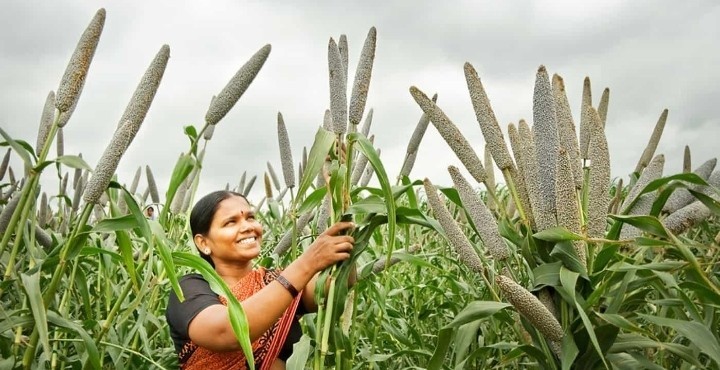
MILLETS:THE FUTURE OF CLIMATE RESILIENT AGRICULTURE
Millets are nutritious cereal crops that play an important role in sustainable agriculture. Pearl millet (Cenchrus americanus) and finger millet (Eleusine coracana) are important examples.
Millets are well suited to many dryland farming systems because they can tolerate drought better than several major cereal crops. They generally require less water than rice and are valuable sources of nutrients, dietary fibre and minerals.
With climate change increasing the risk of drought and irregular rainfall, millet cultivation can help farmers diversify crops and improve food security. Promoting millet consumption also supports sustainable farming and rural livelihoods.
🌾Millets are not just traditional crops; they are promising crops for a climate-resilient and food-secure future. 🌱
Agriculture fact: 2023 was declared the International Year of Millets by the United Nations, following India's initiative.
PRODUCTION ECONOMICS
why does it matters in Agriculture?
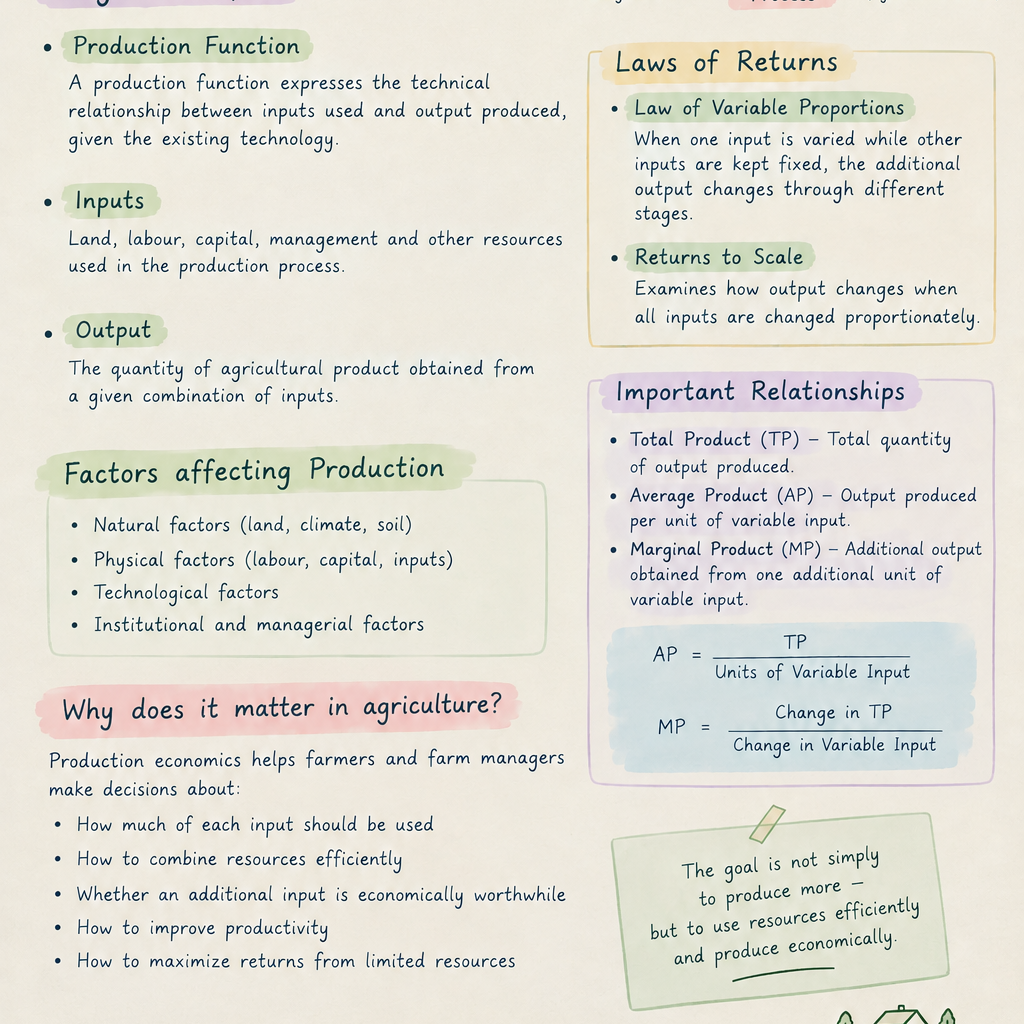
Production economics deals with the relationship between inputs and outputs and helps us understand how resources can be combined and used efficiently in agricultural production.
Key Concepts
Production Function
A production function expresses the technical relationship between inputs used and output produced, given the existing technology.
Inputs
Land, labour, capital, management and other resources used in the production process.
Output
The quantity of agricultural product obtained from a given combination of inputs.
Laws of Returns
Law of Variable Proportions
When one input is varied while other inputs are kept fixed, the additional output changes through different stages.
Returns to Scale
Examines how output changes when all inputs are changed proportionately.
Important Relationships
Total Product (TP) — Total quantity of output produced.
Average Product (AP) — Output produced per unit of variable input.
Marginal Product (MP) — Additional output obtained from one additional unit of variable input.
AP = TP / Units of Variable Input
MP = Change in TP / Change in Variable Input
Why does it matter in agriculture?
Production economics helps farmers and farm managers make decisions about:
• How much of each input should be used
• How to combine resources efficiently
• Whether an additional input is economically worthwhile
• How to improve productivity
• How to maximize returns from limited resources
The goal is not simply to produce more — but to use resources efficiently and produce economically.
The mixed cropping system followed in Kannamangalam village, Ilayangudi Taluk, Sivagangai District, is a practical example of diversified rainfed agriculture. Chilli is maintained as the main crop, while vegetables, onion, coriander, groundnut, blackgram, bhendi and sweet potato are integrated into different parts of the field.
The system not only provides vegetables for household consumption but also creates additional income through the sale of surplus produce. The main chilli crop can produce more than 1.5 tonnes per acre, with dried chilli marketed through local traders. Since chilli prices fluctuate according to demand and supply, diversification helps reduce the economic risk faced by farmers.
Under favourable conditions, the farmer may obtain a gross income of around ₹2–3 lakh per acre and a net profit of more than ₹1 lakh after cultivation costs, within approximately 6–7 months. Therefore, this locally practiced mixed cropping system can be considered a productive, diversified and economically beneficial approach for rainfed farming in Sivagangai District.
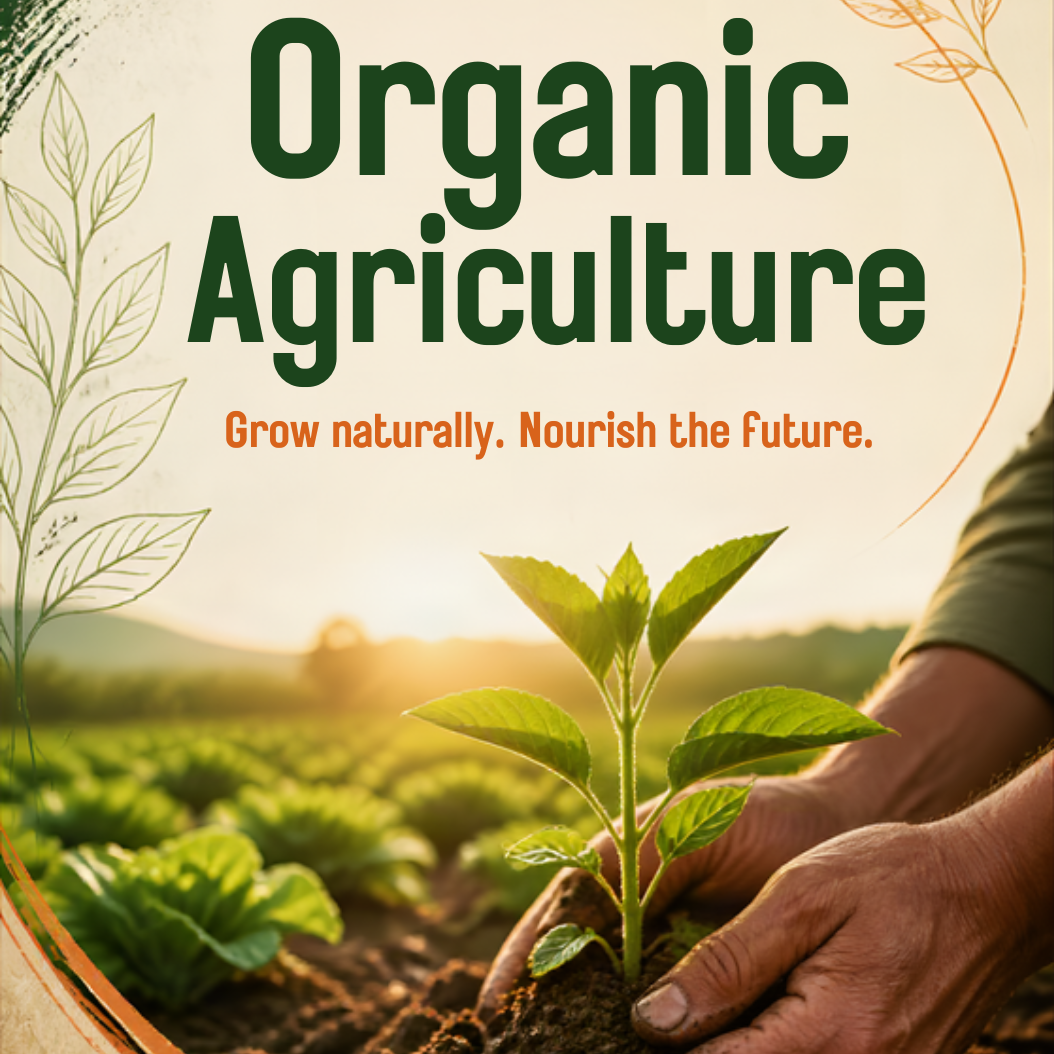
# Organic Agriculture: Farming for a Healthy Soil and Sustainable Future
## Introduction
Agriculture is the foundation of human civilization, providing food, fibre, fodder and raw materials for industries. However, intensive agricultural practices and excessive dependence on synthetic fertilizers and pesticides can contribute to soil degradation, water pollution, loss of biodiversity and other environmental concerns.
**Organic agriculture** provides a farming approach that emphasizes ecological processes, biological cycles and the responsible use of natural resources.
Organic agriculture is not simply the replacement of chemical fertilizers with organic manures. It is a holistic farming system that aims to maintain soil fertility, support biodiversity, recycle farm resources and produce safe and nutritious food while protecting the environment.
What is Organic Agriculture?
Organic agriculture is a production system that works with natural ecological processes. It promotes the use of organic manures, compost, crop residues, green manures, biological pest-control methods and other naturally derived inputs.
The main objective is to maintain a healthy relationship between **soil, plants, animals, microorganisms and the environment**. Instead of depending heavily on external synthetic inputs, organic farming encourages recycling of nutrients within the farm.
Principles of Organic Agriculture
Organic agriculture is based on several important principles:
1. **Maintaining soil health** – Healthy soil is the foundation of productive agriculture.
2. **Nutrient recycling** – Crop residues, animal manures and other organic materials are recycled as nutrient sources.
3. **Biodiversity conservation** – Diverse crops, beneficial insects, microorganisms and other organisms are encouraged.
4. **Ecological pest management** – Biological, cultural and mechanical methods are used to manage pests.
5. **Efficient resource use** – Water, soil, energy and other farm resources are used responsibly.
6. **Environmental protection** – Farming practices should minimize pollution and protect natural ecosystems.
7. **Sustainable production** – Agricultural productivity should be maintained without compromising the ability of future generations to produce food.
## Major Practices in Organic Agriculture
### 1. Organic Manures and Compost
Farmyard manure, compost, vermicompost and other organic materials improve soil structure and contribute nutrients. They also support beneficial soil microorganisms.
### 2. Green Manuring
Green manure crops are grown and incorporated into the soil while they are still green. Leguminous green manure crops can contribute nitrogen and organic matter to the soil.
### 3. Crop Rotation
Growing different crops in sequence helps maintain soil fertility, disrupt pest and disease cycles and improve the efficient use of nutrients.
### 4. Cover Cropping and Mulching
Cover crops protect the soil from erosion and help conserve moisture. Mulching with suitable organic materials can reduce evaporation, suppress weeds and add organic matter as it decomposes.
### 5. Biological Pest Management
Organic agriculture encourages the use of beneficial organisms such as predators, parasitoids and microbial biocontrol agents. Cultural and mechanical methods are also important components of pest management.
### 6. Integrated Weed Management
Weeds can be managed through crop rotation, mulching, hand weeding, mechanical methods, competitive crops and other appropriate practices rather than relying primarily on synthetic herbicides.
### 7. Livestock Integration
Animals can contribute manure, fodder cycling and additional farm income. Integrating crops and livestock can improve nutrient recycling within the farming system.
## Benefits of Organic Agriculture
Organic agriculture provides several potential benefits when properly planned and managed.
**Improved soil health:** Regular addition of organic matter can improve soil structure, water-holding capacity and biological activity.
**Environmental protection:** Reduced dependence on synthetic agricultural inputs can help minimize certain forms of soil and water contamination.
**Biodiversity conservation:** Diverse cropping systems and ecological pest-management practices can provide better conditions for beneficial organisms.
**Resource recycling:** Crop residues, livestock manure and other biodegradable materials can be converted into useful resources.
**Sustainable farming:** Organic systems emphasize maintaining the productivity and ecological functions of agricultural land over the long term.
**Potential livelihood opportunities:** Organic products can provide market opportunities for farmers when suitable production, certification, processing and marketing systems are available.
## Challenges of Organic Agriculture
Despite its advantages, organic agriculture also faces challenges. Conversion from conventional farming to organic systems may require changes in farm management and investment in knowledge and infrastructure. Nutrient management can be more complex because nutrients from organic sources are released gradually. Weed, pest and disease management may require careful monitoring and timely intervention.
Farmers may also face challenges related to certification, availability of suitable organic inputs, market access, storage, processing and obtaining appropriate prices. Therefore, successful organic farming requires **technical knowledge, good planning, suitable crop selection and reliable markets**.
## Role of Farmers and Consumers
Farmers play a central role in developing sustainable agricultural systems. Proper soil management, crop diversification, recycling of organic resources and ecological pest management can strengthen farm sustainability.
Consumers also have an important role. Awareness about organic production, responsible purchasing and understanding certification and labeling can support transparent organic markets.
## Organic Agriculture and the Future
The future of agriculture requires a balance between food production, environmental protection and efficient resource use. Organic agriculture contributes to this goal by placing greater emphasis on soil health, biodiversity, nutrient recycling and ecological processes.
Modern technologies can also complement organic farming. Digital agriculture, weather information, precision irrigation, remote sensing and improved biological inputs can help farmers make better decisions while maintaining organic production principles.
## Conclusion
**Organic agriculture is more than a method of producing food; it is an approach to farming that places soil, biodiversity and ecological sustainability at the centre of agricultural production.** By improving soil health, recycling farm resources, conserving biodiversity and using environmentally responsible management practices, organic agriculture can contribute to a more sustainable food system.
The future of farming depends not only on how much food we produce, but also on **how responsibly we use the soil, water and natural resources that make food production possible**. Healthy soil today can help create a healthier and more sustainable agricultural future for generations to come.
Protected cultivation is an agricultural method where crops are grown inside controlled or partially controlled microclimates using structures like poly houses, net houses, and tunnels to shield them from adverse weather, pests, and diseases.
The common structures used in protected cultivation are:
*Poly houses: Covered with UV-stabilized polyethylene films to trap heat and regulate temperature.
*Shade Net Houses: Simple frames draped with UV shade nets (25% to 75% shade) to lower light intensity and temperature.
*Low and Walk-in Tunnels: Temporary or semi-permanent hoop structures used for early-stage crop protection and off-season nurseries.
*Glass Greenhouses: High-precision, durable structures for active climate control and commercial export-grade production.
*Mist chamber : It is an enclosed, humid structure that uses high-pressure nozzles to spray fine water droplets, helping plant cuttings grow roots.
STATUS OF PROTECTED CULTIVATION:
Greenhouse crop production is now a growing reality throughout the world with an estimated
405,000 ha of greenhouses spread over all the continents. There are more than 55 countries
now in the world where cultivation of crops is undertaken on a commercial scale under cover,
and it is continuously growing at a fast rate internationally.
It has more useful in horticulture crops like Capsicum, Cucumber, Rose, Gerbera , Carnation, Strawberry and high value crops.
Central and State scheme for Protected cultivation:
(Major Central Government) *Schemes Mission for Integrated Development of Horticulture (MIDH) / National Horticulture Mission (NHM): Covers 40% to 50% of the construction cost for general farmers (and up to 55–60% for small, marginal, or women farmers) for structures like polyhouses, shade nets, and plastic tunnels. Typically limited to a maximum of 4,000 square meters per beneficiary
*National Horticulture Board (NHB) Scheme: Focuses on commercial horticulture projects under protected cover for larger setups (generally above 2,500 square meters). It provides credit-linked back-ended subsidies for infrastructure, planting materials, and irrigation systems.
*Agriculture Infrastructure Fund (AIF): Provides interest subvention of 3% per year on loans up to ₹2 crore for agricultural infrastructure projects, which can be combined with NHB or NHM subsidies.
(State government schemes):
*State Horticulture Missions: Individual states (such as Maharashtra, Tamil Nadu, Karnataka, and Rajasthan) offer supplementary state-level subsidies that can further reduce the initial capital burden.
*NABARD: Facilitates credit-linked backing by helping farmers secure bank loans aligned with central and state subsidy schemes.
AGRICULTURAL ECONOMICS
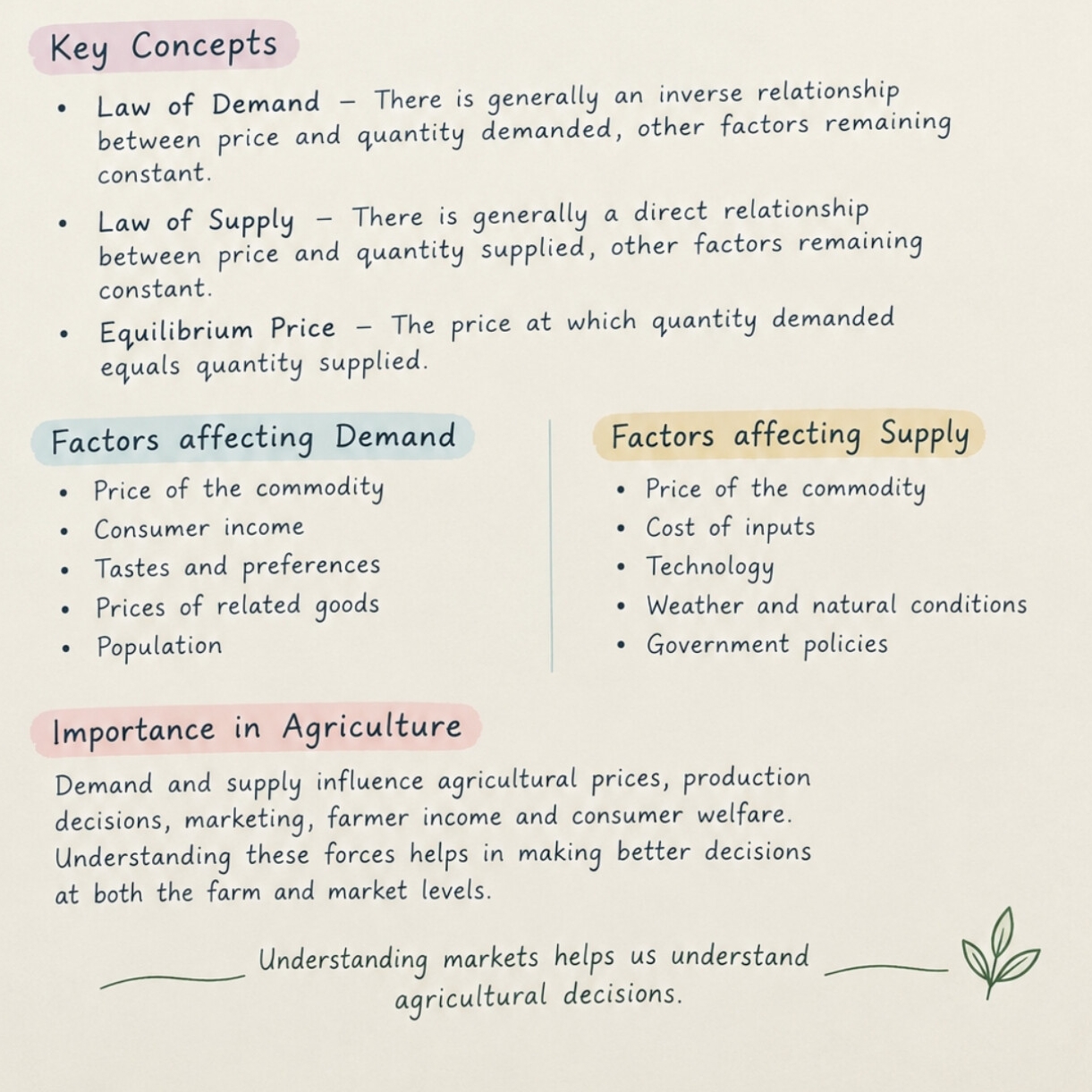
Demand and Supply
Demand refers to the quantity of a commodity that consumers are willing and able to purchase at a given price.
Supply refers to the quantity of a commodity that producers are willing and able to offer for sale at a given price.
Key concepts:
• Law of Demand — There is generally an inverse relationship between price and quantity demanded, other factors remaining constant.
• Law of Supply — There is generally a direct relationship between price and quantity supplied, other factors remaining constant.
• Equilibrium Price — The price at which quantity demanded equals quantity supplied.
Factors affecting Demand
• Price of the commodity
• Consumer income
• Tastes and preferences
• Prices of related goods
• Population
Factors affecting Supply
• Price of the commodity
• Cost of inputs
• Technology
• Weather and natural conditions
• Government policies
Importance in Agriculture
Demand and supply influence agricultural prices, production decisions, marketing, farmer income and consumer welfare. Understanding these forces helps in making better decisions at both the farm and market levels.
Understanding markets helps us understand agricultural decisions.
Carbon Robotics is a leading agriculture technology company that provides cost-effective, efficient and sustainable solutions for farmers. We pioneered our laser-weeding technology as an alternative weed control method that enables growers to save time and money on one of their most expensive and time-HortiBotis sprays exactly above the weeds.
It is also cheaper than the tools currently used for weed-elimination as it can work extended periods of time.consuming tasks: weed control.Artificial Intelligence (AI) and robotics are transforming weed management by enabling precise identification and removal of weeds while reducing dependence on conventional herbicide and manual lab
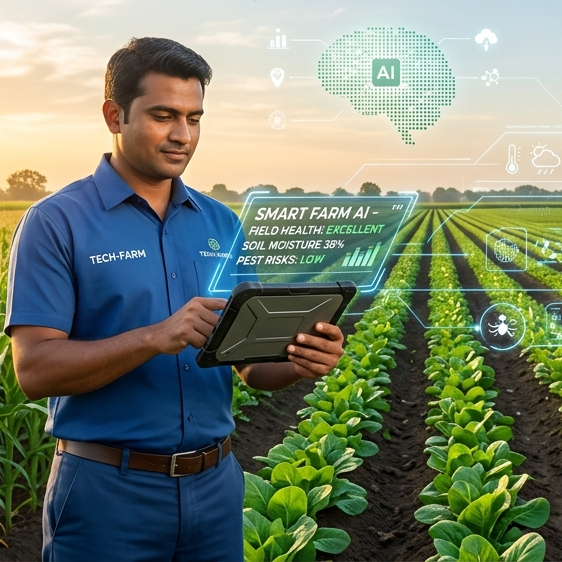
AI IN AGRICULTURE IS IMPORTANT
Introduction to Agricultural Economics
Agricultural economics combines economic principles with agricultural practices to understand how resources can be allocated efficiently and how decisions influence production, income, markets, and rural development.
The major areas of agricultural economics include:
Production Economics: Production functions, laws of returns, and efficient resource allocation.
Farm Management: Farm planning, cost and return analysis, resource utilization, risk, and uncertainty.
Agricultural Finance: Agricultural credit, investment, and financial decision-making.
Agricultural Marketing: Marketing functions, channels, price determination, and market efficiency.
Demand and Supply: Consumer behaviour, market demand, supply conditions, and agricultural prices.
Agricultural Policy: Price policies, government interventions, institutions, and their impact on farmers and agriculture.
Rural Development: The economic conditions of farming communities and the contribution of agriculture to overall development.
Agricultural economics is important because it connects economic theory with practical agricultural decisions. It helps us understand how farmers allocate resources, manage risks, improve profitability, respond to market conditions, and adapt to government policies.
Agriculture is the field; economics is the lens through which we understand its decisions.
l
What is a Biofertilizers:
Biofertilizers are the preparations containing beneficial microorganisms this is when applied to seeds, plants, or soil, improve plant growth and soil fertility by increasing the availability of essential nutrients to plants.
They help plants get nutrients naturally by:
*Fixing atmospheric nitrogen
*Solubilizing and mineralizing phosphorus and other essential nutrients
*Decomposing organic matter.
There are different types of biofertilizers available in the market.
*Rhizobium – fixes nitrogen in legume crops
*Azotobacter – fixes atmospheric nitrogen
*Azospirillum – promotes plant growth and nitrogen fixation
*Phosphate-solubilizing bacteria (PSB) – make phosphorus available to plants
The current scenario of biofertilizers:
In today's world due to increasing in awareness of people about increasing of residual effects of chemical fertilizers in soil and foods. So many farmers are changing over to Organic farming.
The global biofertilizers market is expanding rapidly, projected to reach billions of dollars as agriculture shifts toward sustainable and eco-friendly practices.
*Market Size: The global biofertilizer market is valued at over USD 3 billion and continues to grow at a compound annual growth rate (CAGR) of roughly 10% to 12%.
*Drivers: Rising chemical fertilizer costs, severe soil degradation, and strict government policies favoring organic farming fuel this growth.
*Regional Shifts: Asia-Pacific shows the fastest regional growth due to rising populations and heavy government backing for sustainable farming, while North America maintains a major market share.
*Advanced Formulations: Modern production moves beyond basic carrier materials to liquid formulations, microencapsulation, nano- mobilization, and biofilm-based bio inoculants for better shelf life and field efficacy.
This the one of major achievement in the field of organic farming.
# Artificial Intelligence in Agriculture: Transform your Farm
## Introduction
Agriculture is the backbone of the Indian economy and provides the mainstay for food and nutritional security. However, the agriculture sector in a changing world is challenged by climate change, water scarcity, soil health deterioration, pests and diseases, rising input costs, diminishing farm labour, and an increasing demand for food. The solution to many of these challenges lies in newer technologies.
One such game-changing technology that is set to revolutionize and transform the agriculture sector is Artificial Intelligence (AI). AI is the ability of computer systems and robots to mimic and execute tasks that are usually done by humans such as thinking, learning, understanding, reasoning, problem-solving, seeing, hearing, and moving. When combined with sensors, drones, satellites, robots, smartphones, and agricultural machinery, artificial intelligence has the potential to make farming more precise, productive, efficient, profitable, and sustainable.
In this article, we will learn what AI is, major applications of AI in agriculture, key benefits, and challenges for Indian farmers.
## What is Artificial Intelligence (AI) in Agriculture?
Artificial intelligence in agriculture is the application of computer algorithms and machine learning techniques to learn from and analyze agricultural data to make useful decisions and information for farming. The information can come from various sources such as sensors, satellites, drones, farm machinery, smartphones, and farm records.
Artificial intelligence algorithms can process all this information and help farmers make decisions regarding:
- Choice of crops
- Soil and nutrient management
- Irrigation
- Pest and disease identification
- Weed detection
- Yield estimation
- Weather forecasting
- Harvesting
- Market and price prediction
Thus AI helps take agriculture decision-making from traditional practices to data-informed precision agriculture.
## Major Applications of AI in Agriculture
### 1. AI Based Crop Monitoring
AI can analyze the images collected via drones, satellites, and smartphones to assess the crop. It can detect subtle changes in leaf color, plant height, canopy cover, and health of the crop.
For instance, the AI can detect specific areas in the field that may be lacking nutrients and advise targeted applications to address the deficiency instead of applying fertilizers to the whole field.
### 2. Pest and Disease Detection
Pests and diseases can cause devastating losses if not detected and managed in time. AI image recognition algorithms can detect symptoms on leaves, fruits, stems, and other plant parts.
A farmer can take a picture of the sick plant and send it to an AI-based mobile application by which it can compare and identify the type of disease by accessing its database. With early detection, the farmer can make decisions regarding pesticides, protect the yield, and reduce crop losses.
### 3. Precision Irrigation
Water is one of the most critical inputs in farming. AI can analyze the information from soil-moisture sensors, weather forecast, crop type, and its evapotranspiration rate, and prescribe the right amount of water at the right time.
AI-based precision irrigation can automatically control the irrigation system to meet the crop-water requirements. This would save water, improve water use efficiency, and enhance crop productivity.
### 4. Soil and Nutrient Management
AI can analyze data from soil test reports and other field data to prescribe nutrient management practices.
Instead of broadcasting fertilizers at uniform rates, AI can help identify field variability and help in precision placement and application of fertilizers. This would reduce fertilizer use and environmental pollution.
### 5. Weed Detection and Management
Weeds are a serious threat to a healthy crop. AI-powered visual recognition technology via cameras and drones can identify and differentiate between crops and weeds. AI-powered machines can then selectively kill weeds without affecting the crop. This would reduce herbicides use and help precision weed management.
### 6. Yield Prediction
AI can analyze field data such as past yield records, weather, soil health, crop type, and input use to predict the crop yield before harvest.
Yield prediction helps farmers, traders, food processing industries, and government make suitable plans regarding stocks, food security, and market availability.
### 7. Weather and Climatic Decision Support
Weather and climate have a huge impact on farming. AI can help identify trends from voluminous weather and field data to provide intelligence to farmers. Farmers can then use this data regarding changing weather patterns to decide:
- What to grow
- When to sow
- When to irrigate
- When to apply fertilizers
- When to spray pesticides
- When to harvest
- Take farm management decisions
### 8. Agricultural Robotics
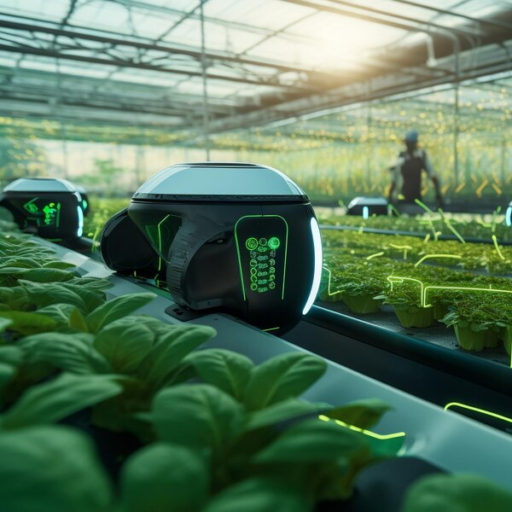
Agricultural robots or agri-bots can be used for weeding, placing seeds, monitoring crops, and harvesting fruits. AI enables these robots to recognize plant species and objects and perform specific farm tasks.
### 9. Smart Greenhouses
AI can be used in conjunction with sensors to monitor and control variables such as temperature, humidity, light intensity, carbon dioxide levels, and soil moisture in greenhouses for better yield.
### 10. AI Based Agricultural Advisory
AI-based mobile applications and platforms can provide farm-specific information to farmers. A farmers can get information about what to grow, how to manage pests and diseases, fertilizer application, irrigation, weather, and market intelligence. Further, AI-based agricultural advisory can be made accessible to farmers in local languages.
## Integration of AI with Other Technologies
The power of AI increases manifold when it is integrated with other technologies. Some of the key technologies along with AI that can be used in agriculture are provided below:
| Technology | Role in Agriculture |
| --- | --- |
| Artificial Intelligence | Decision-making and prediction |
| Internet of Things (IoT) | Farm data collection |
| Drones | Crop imaging and monitoring |
| Remote sensing | Crop assessment |
| Robotics | Farm operations automation |
| GPS/ GIS | Farm mapping |
| Cloud computing | Storing and analyzing farm data |
| Smartphones | Access to AI apps by farmers |
| Blockchain | Traceability and accountability |
The convergence of all these technologies has given rise to smart farms and precision agriculture or agriculture 4.0.
## Benefits of AI in Agriculture
AI has multiple benefits that can make farms more productive and profitable. It can provide the following advantages:
1. Higher crop productivity
2. Early pest and disease detection
3. Efficient use of water
4. Efficient fertilizer application
5. Less use of pesticides
6. Lower cost of production
7. Less dependence on labour
8. Better farm decisions
9. Yield prediction
10. Efficient use of resources
11. Reduced environmental impact
12. Higher resilience to climate change
## Challenges in Adopting AI
Challenges of AI adoption are multifactorial and include:
### 1. High Cost of Adoption
The cost of setting up AI-based precision farming with various sensors and machines may be beyond the means of small and marginal farmers.
### 2. Lack of Digital Literacy
Farmers will need training and capacity building to use AI-based technologies.
### 3. Poor Internet Connectivity
The penetration of digital technologies in rural areas is poor.
### 4. Data Availability
AI algorithms require volumes of data to make intelligent decisions. In many cases, the data may be poor in quality and quantity.
### 5. Agricultural Land Size and Holding Pattern
Most Indian farmers have small and fragmented land holdings on which the adoption of capital-intensive technology may not be viable.
### 6. Need for Local Technologies
Most AI tools are developed using data from western countries which may not be useful in Indian conditions. There is a need to develop local AI algorithms using local data. Similarly, there is a need to translate these technologies into local languages.
## Future Prospects
The future of farming undoubtedly lies in convergence with robotics, drones, AI, IoT, remote sensing, and satellites.
The future of AI is exciting as it will enable giving digital intelligence to farms. A farmer may just take a picture of the farm and get information about crop health, soil fertility, pest problems, and weather forecast from a mobile application. AI may also make farming autonomous - when machines perform various agricultural operations with little or no human supervision. For India, which has diverse climatic conditions, diverse crops, diverse soil types, diverse pests and diseases, AI can be a real blessing. However, the technologies need to be affordable and available in local languages to reach out to millions of Indian farmers.
## Conclusion
Artificial intelligence is poised to play a major role in future precision agriculture. AI has the potential to make smarter decisions based on the massive volumes of agricultural data it can analyze to improve crop productivity and farm profitability. However, AI needs to be seen as a supportive decision-making tool rather than a fully automated system that replaces human decisions. Coupled with precision agriculture, IoT, and robotics, AI can make agriculture more productive, profitable, climate-resilient, and sustainable.
How Drones Are Reshaping Industry: From Farms to Front DoorsDrone technology has moved well past hobbyist photography and military use. Today, unmanned aerial vehicles (UAVs) are quietly transforming entire industries, offering speed, precision, and safety that ground-based methods simply can't match.
Agriculture: Eyes in the Sky for Better Yields
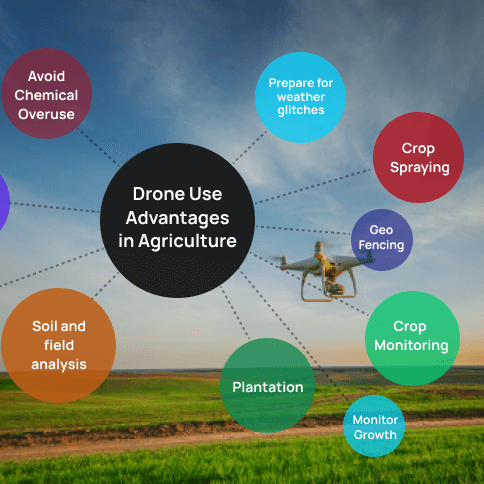
Farmers were among the earliest adopters of commercial drone technology, and for good reason. Equipped with multispectral cameras, drones can survey hundreds of acres in minutes, spotting irrigation problems, pest infestations, and nutrient deficiencies long before they're visible to the naked eye. Some models now handle precision spraying, applying fertilizer or pesticide only where needed — cutting chemical use significantly while boosting crop health. This shift from guesswork to data-driven farming is a major reason "precision agriculture" has become a buzzword across the sector.
Delivery: The Last Mile Gets Shorter
Delivery drones promise to solve one of logistics' oldest headaches: the "last mile" problem. Companies have been testing drone delivery for everything from fast food to prescription medications, especially in suburban and rural areas where traditional delivery trucks are slower and less efficient. Medical logistics has seen some of the most compelling results — drones now transport blood, vaccines, and emergency supplies to remote clinics in regions with poor road infrastructure, cutting delivery times from hours to minutes.
Construction and Infrastructure Inspection
On construction sites, drones now handle site surveys, progress tracking, and volumetric measurements of materials like gravel or sand — tasks that once required expensive manned aircraft or risky manual measurement. Infrastructure inspectors use drones to examine bridges, power lines, cell towers, and wind turbines, reaching heights and angles that would otherwise require scaffolding or dangerous climbs. This not only saves money but removes human inspectors from genuinely hazardous situations.
Energy and Utilities
Utility companies deploy drones equipped with thermal cameras to inspect solar farms, detect faulty panels, and monitor pipelines for leaks. In the oil and gas sector, drones inspect flare stacks and offshore platforms without shutting down operations or putting workers at risk.
Public Safety and Emergency Response
First responders increasingly rely on drones for search-and-rescue missions, wildfire monitoring, and disaster assessment. A drone can scan a collapsed building or flooded area in minutes, feeding real-time footage to rescue teams and helping them prioritize where to focus efforts.
The Road Ahead
As battery life improves, regulations mature, and AI-powered autonomy becomes more reliable, drone applications will only expand. The common thread across every industry adopting this technology is clear: drones let organizations gather better data, reach difficult places, and act faster — all while reducing risk to human workers. What started as a novelty is quickly becoming standard operating equipment across the global economy.
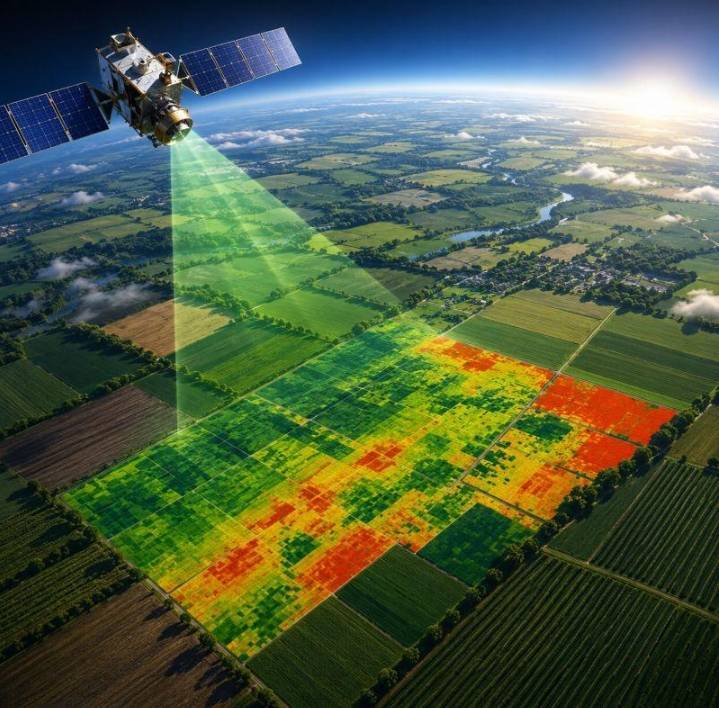
Remote sensing is the science of collecting information about the Earth’s surface without direct physical contact with the objects or areas being studied. It uses sensors mounted on satellites, aircraft, drones, or other platforms to detect and record electromagnetic radiation reflected or emitted from the Earth.In agriculture, remote sensing is an important technology for crop monitoring and precision farming. Satellite images can provide information about crop health, growth, moisture status, nutrient deficiencies, and pest or disease-affected areas. Vegetation indices such as NDVI (Normalized Difference Vegetation Index) are used to assess the condition and vigour of crops.
Remote sensing also helps in soil mapping, land-use classification, irrigation management, drought monitoring, yield estimation, and identification of stressed crops. It allows farmers and agricultural experts to monitor large areas quickly and efficiently. Multispectral and hyperspectral sensors can provide detailed information about crops and soil.
The major advantages of remote sensing are large-area coverage, rapid data collection, repeated monitoring, reduced field work, and cost-effective management. Therefore, remote sensing plays an important role in modern agriculture by supporting better decision-making, efficient use of water and fertilizers, and improved crop productivity.
After mushrooms are harvested, the leftover material that includes the partially decomposed paddy straw, sawdust and other agricultural wastes together called as Spent Mushroom Substrate (SMS). This might look like simple waste. But it’s actually full of life.
This material contains millions of helpful microbes (tiny living organisms) that work quietly in the soil. They help break down nutrients, make them easier for plants to absorb, and even protect plants from harmful diseases. This includes bacteria that helps in phosphorus solubilization (PSB), IAA ( Indole-3- acetic acid) production and sources of other plant growth factors. These bacterial populations can be explored for understanding beneficial microorganisms and for encouraging sustainable agriculture.
If we think SMS as a natural booster for soil:
• It enriches the soil with nutrients
• Supports healthier and stronger plant growth
• Reduces the need for chemical fertilizers
• Promotes eco-friendly farming
Instead of throwing it away, this “waste” can be reused to improve soil health and grow better crops naturally.
Bharat mein krishi hamesha se hamari arthvyavastha aur samaj ki reedh (backbone) rahi hai. Lekin pichle kuch saalon mein, is kshetra mein ek bohot bada badlaav dekhne ko mil raha hai. Paramparik kheti ke saath-saath ab technology aur innovation ka istemaal tezi se badh raha hai, jo kisano aur agri-businesses ke liye naye raaste khol raha hai.
Sabse bada focus ab sirf fasal ugane par nahi, balki post-harvest management aur agri-food processing par aa gaya hai. Aksar dekha jata hai ki sahi storage aur processing ke anupalabdhta ke karan kafi fasal barbad ho jati hai. Lekin nayi takneekon aur agri-startups ke aane se is nuksan ko kam kiya ja raha hai. Fasal ki quality ko maintain rakhne aur use seedhe sahi market tak pahunchane mein nayi supply chain strategies bohot madadgar sabit ho rahi hain.
Iske alawa, Agri-intelligence aur smart apps ka role bhi kaafi bada ho gaya hai. AI aur data analytics ka istemaal karke ab mitti ki quality, mausam ka haal, aur plant pathology (paudhon ki bimariyan) ko pehle se hi samajh liya jata hai. Ek smart agri-intelligence platform kisano ko sahi waqt par sahi faisla lene mein madad karta hai, chahe wo naye beej bone ka waqt ho ya pest control ka.
Naye agricultural ventures, jaise vermicomposting ya strawberry jaisi cash crops ki nayi jagahon par trial farming, is baat ka saboot hain ki naye daur ke kisan aur agriculture students ab risk lene aur experiment karne se ghabrate nahi hain. Ye innovations na sirf aamdani badhate hain, balki kheti ko aur bhi sustainable banate hain.
Aane wala waqt krishi aur technology ke is anokhe sangam ka hai, jahan khet aur code, dono milkar duniya ka pet bharenge.