We have heard about spreading love or happiness etc. but have you ever heard about spreading 'pain'? Well, first look at some examples:-
* When you pass out from school or a certain grade and then your school adds more facilities. Oh! how we wish we had had them and feel envy towards those students who will be enjoying them. (this happens in most of the cases.)
* When women (patriarchal) do not support other women or when they force them to follow the same toxic traditions* that they had to, because they didn't have any choice.
* When the society forces people to get married or have kids cause they had to do the same or rather go through the same thing or pain.
From these examples, we find a common factor and that is - people want other people to go through the same pain or suffering that they themselves did or rather had to 'cause the society forced them and now they want to do the same with others. (In most of the cases) sometimes, they don't have a choice (in 1st example), so they can't do anything even if they want to, but when they can, people tend to make sure to spread pain.
In situations like these, are where the terms like compassion, empathy and so on must be practised by us so that we don't make others suffer.
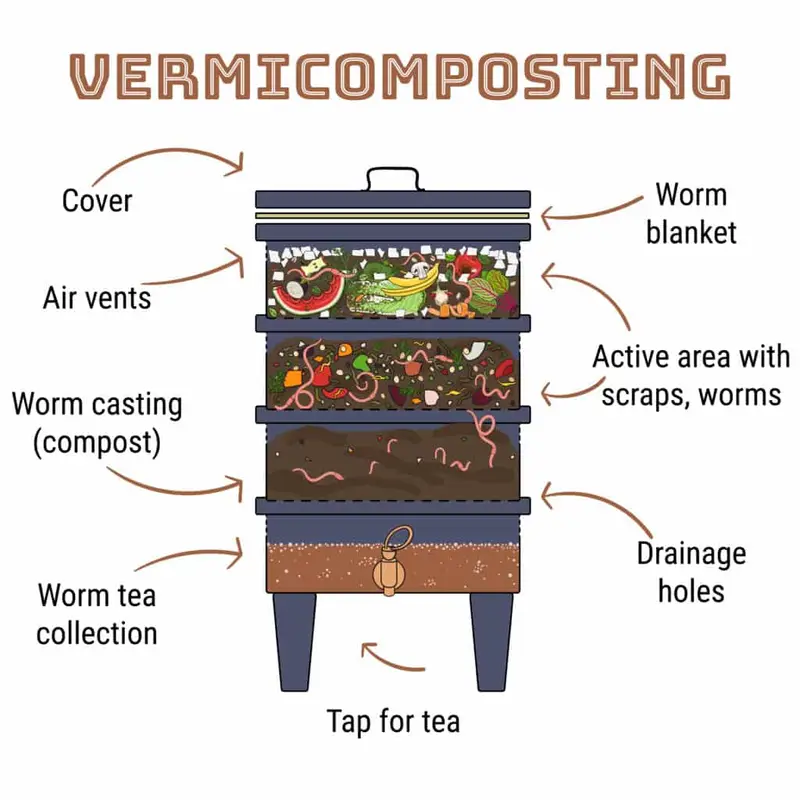
Vermiculture is the practice of using worms—most commonly red wigglers (*Eisenia fetida*) or red earthworms—to break down organic waste into a rich, dark fertilizer known as vermicompost or worm castings. It's a sustainable, low-cost way to recycle kitchen and garden waste while producing one of the most nutrient-dense soil amendments available.
✓How the Process Works
Worms are housed in a bin filled with bedding material such as shredded newspaper, cardboard, or coconut coir, kept consistently moist. As organic scraps are added, the worms consume the material along with the bacteria and microbes breaking it down, then excrete castings rich in nitrogen, phosphorus, potassium, and beneficial microorganisms.
✓Setting Up a Worm Bin
A good bin needs proper drainage and ventilation holes, a dark environment (worms avoid light), and a stable temperature between 55–77°F (13–25°C). Feed worms fruit and vegetable scraps, coffee grounds, tea bags, and crushed eggshells—avoid meat, dairy, oily foods, and citrus, which can cause odor or acidity problems.
✓Benefits
Vermiculture reduces household waste sent to landfills, improves soil structure and water retention, boosts plant growth naturally, and can be done indoors or outdoors, making it accessible even for apartment dwellers. Harvesting castings every few months yields a valuable, chemical-free fertilizer for gardens and houseplants alike.
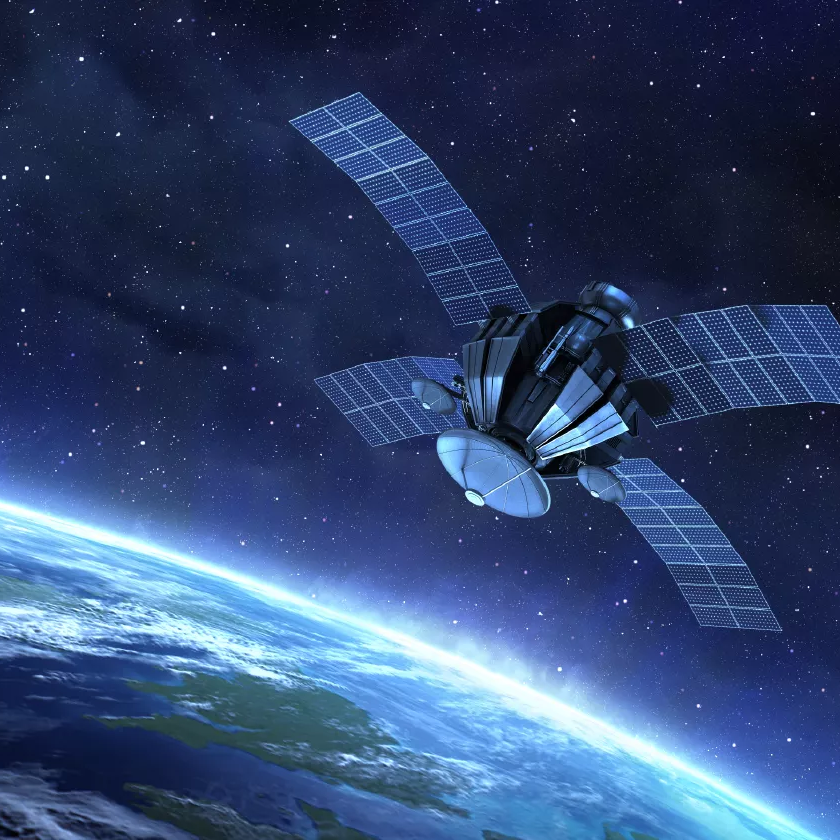
Remote sensing is the science of collecting information about the Earth’s surface without direct physical contact with the objects or areas being studied. It uses sensors mounted on satellites, aircraft, drones, or other platforms to detect and record electromagnetic radiation reflected or emitted from the Earth.In agriculture, remote sensing is an important technology for crop monitoring and precision farming. Satellite images can provide information about crop health, growth, moisture status, nutrient deficiencies, and pest or disease-affected areas. Vegetation indices such as NDVI (Normalized Difference Vegetation Index) are used to assess the condition and vigour of crops.
Remote sensing also helps in soil mapping, land-use classification, irrigation management, drought monitoring, yield estimation, and identification of stressed crops. It allows farmers and agricultural experts to monitor large areas quickly and efficiently. Multispectral and hyperspectral sensors can provide detailed information about crops and soil.
The major advantages of remote sensing are large-area coverage, rapid data collection, repeated monitoring, reduced field work, and cost-effective management. Therefore, remote sensing plays an important role in modern agriculture by supporting better decision-making, efficient use of water and fertilizers, and improved crop productivity.
Bharat mein krishi hamesha se hamari arthvyavastha aur samaj ki reedh (backbone) rahi hai. Lekin pichle kuch saalon mein, is kshetra mein ek bohot bada badlaav dekhne ko mil raha hai. Paramparik kheti ke saath-saath ab technology aur innovation ka istemaal tezi se badh raha hai, jo kisano aur agri-businesses ke liye naye raaste khol raha hai.
Sabse bada focus ab sirf fasal ugane par nahi, balki post-harvest management aur agri-food processing par aa gaya hai. Aksar dekha jata hai ki sahi storage aur processing ke anupalabdhta ke karan kafi fasal barbad ho jati hai. Lekin nayi takneekon aur agri-startups ke aane se is nuksan ko kam kiya ja raha hai. Fasal ki quality ko maintain rakhne aur use seedhe sahi market tak pahunchane mein nayi supply chain strategies bohot madadgar sabit ho rahi hain.
Iske alawa, Agri-intelligence aur smart apps ka role bhi kaafi bada ho gaya hai. AI aur data analytics ka istemaal karke ab mitti ki quality, mausam ka haal, aur plant pathology (paudhon ki bimariyan) ko pehle se hi samajh liya jata hai. Ek smart agri-intelligence platform kisano ko sahi waqt par sahi faisla lene mein madad karta hai, chahe wo naye beej bone ka waqt ho ya pest control ka.
Naye agricultural ventures, jaise vermicomposting ya strawberry jaisi cash crops ki nayi jagahon par trial farming, is baat ka saboot hain ki naye daur ke kisan aur agriculture students ab risk lene aur experiment karne se ghabrate nahi hain. Ye innovations na sirf aamdani badhate hain, balki kheti ko aur bhi sustainable banate hain.
Aane wala waqt krishi aur technology ke is anokhe sangam ka hai, jahan khet aur code, dono milkar duniya ka pet bharenge.
THE NEW DELHI DISPATCH: India’s NEW DELHI, February 21, 2026 — The India AI Impact Summit 2026 concluded yesterday at Bharat Mandapam, leaving behind a complex legacy. Billed as the Global South's definitive answer to Silicon Valley, the five-day event was a high-contrast study in "Frontier Tech vs. Faltering Infrastructure."
While the government celebrated historic investment pledges and a new world record for AI ethics, the summit was equally defined by viral scandals, security lapses, and political firestorms.
1. THE BREAKTHROUGHS: "Sovereign AI" Takes ShapeThe summit successfully moved India’s AI narrative from "potential" to "infrastructure." The primary focus remained on Sarvajan Hitaya, Sarvajan Sukhaya (Welfare for All).
Strategic Highlights:• GPU Democratization: IT Minister Ashwini Vaishnaw announced that India’s compute capacity has hit 38,000 GPUs, with an additional 20,000 coming online. Access for startups is now priced at just ₹65 per hour via the IndiaAI Mission.
• The $250 Billion Club: Global confidence was signaled by a staggering $250 billion in infrastructure pledges. Notable among these was Google’s $15 billion "AI Hub" in Visakhapatnam and the America-India Connect subsea cable project.
• Indigenous Frontier Models: Bengaluru’s Sarvam AI unveiled "Sarvam 105B," a model trained specifically for 22 Indian languages, prioritizing voice-first interfaces for the rural economy.
• Guinness World Record: Over 250,000 students took a synchronized digital pledge for "Responsible AI" on Day 1, setting a global benchmark for public engagement.
2. THE CONTROVERSIES: "Orion," Thermocol, and Political HeatThe summit’s "Make in India" messaging took a significant hit due to a series of academic and operational blunders that became viral sensations.
The Galgotias University "Robodog" RowThe most damaging controversy involved Galgotias University, which was evicted from the expo after a major misrepresentation:
• The "Orion" Claim: Professor Neha Singh presented a robotic dog named "Orion," claiming it was developed in-house by the university's "Centre of Excellence" under a ₹350 crore investment.
• The Reveal: Netizens quickly identified the robot as a Unitree Go2, a commercially available Chinese product sold for approximately ₹2.5 lakh.
• The Fallout: Following international mockery (including from Chinese state-media), MeitY officials cut the power to the Galgotias stall and ordered them to vacate. The university later issued a "profuse apology," blaming an "ill-informed" representative for the "enthusiastic" misinformation.
• The "Thermocol" Plane: After being evicted, photos of a thermocol "AI plane" model left behind at the Galgotias stall went viral, with critics mocking the contrast between the high-tech claims and the physical exhibits.
The Theft and Security ScandalIn a shocking security lapse, Dhanajay Yadav, CEO of the startup NeoSapien, alleged that patented AI wearables were stolen from his booth. He claimed security personnel forced exhibitors to leave their stalls unattended for 6 hours during a VVIP walkthrough for PM Modi. The items were reportedly recovered by Delhi Police within 24 hours, but the incident raised serious questions about event management.
3. THE DRAWBACKS: "Optics Over Outcomes?"Critics, including Leader of Opposition Rahul Gandhi, labeled the event a "disorganized PR spectacle."
Operational Failures:• Logistical Chaos: Day 1 saw registration crashes, massive overcrowding, and closed gates that left foreign delegates stranded.
• The "Cash" Paradox: Despite being a technology summit, several food stalls were unable to process digital payments due to poor Wi-Fi connectivity, forcing visitors to pay in cash.
• The "Gates" Mystery: Confusion surrounded the attendance of Bill Gates. While the Bill & Melinda Gates Foundation confirmed his participation, his name was intermittently removed from the official website, fueling rumors regarding the "Epstein Files" controversy.
4. DIPLOMATIC WINS: The Sweden-EU ConnectionAmidst the local noise, Sweden’s Deputy PM Ebba Busch utilized the summit to hail the newly concluded EU-India Free Trade Agreement. She described India as a "chosen partner," signaling that Europe is looking to India as its primary alternative to Chinese supply chains in the AI hardware sector.
5. FINAL VERDICTThe India AI Impact Summit 2026 was an imperfect milestone. It proved that India has the scale, the data, and the political will to lead the Global South’s AI journey. However, the Galgotias scandal and the theft allegations serve as a stark reminder: Global leadership requires more than just high-decibel marketing; it requires radical transparency and operational excellence.
As the Delhi Declaration was signed by 70 nations, the world left New Delhi with a clear message: India is the "AI Lab of the World," but the lab still needs better security and a strictly enforced ethics code.