Vermiculture

Vermiculture is the practice of using worms—most commonly red wigglers (*Eisenia fetida*) or red earthworms—to break down organic waste into a rich, dark fertilizer known as vermicompost or worm castings. It's a sustainable, low-cost way to recycle kitchen and garden waste while producing one of the most nutrient-dense soil amendments available.
✓How the Process Works
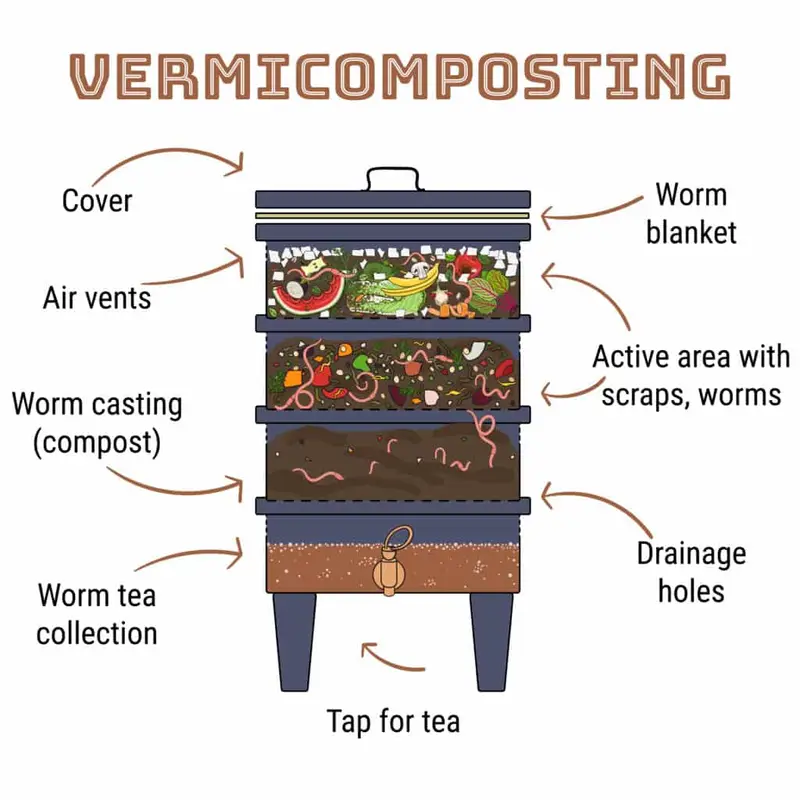
Worms are housed in a bin filled with bedding material such as shredded newspaper, cardboard, or coconut coir, kept consistently moist. As organic scraps are added, the worms consume the material along with the bacteria and microbes breaking it down, then excrete castings rich in nitrogen, phosphorus, potassium, and beneficial microorganisms.
✓Setting Up a Worm Bin
A good bin needs proper drainage and ventilation holes, a dark environment (worms avoid light), and a stable temperature between 55–77°F (13–25°C). Feed worms fruit and vegetable scraps, coffee grounds, tea bags, and crushed eggshells—avoid meat, dairy, oily foods, and citrus, which can cause odor or acidity problems.
✓Benefits
Vermiculture reduces household waste sent to landfills, improves soil structure and water retention, boosts plant growth naturally, and can be done indoors or outdoors, making it accessible even for apartment dwellers. Harvesting castings every few months yields a valuable, chemical-free fertilizer for gardens and houseplants alike.