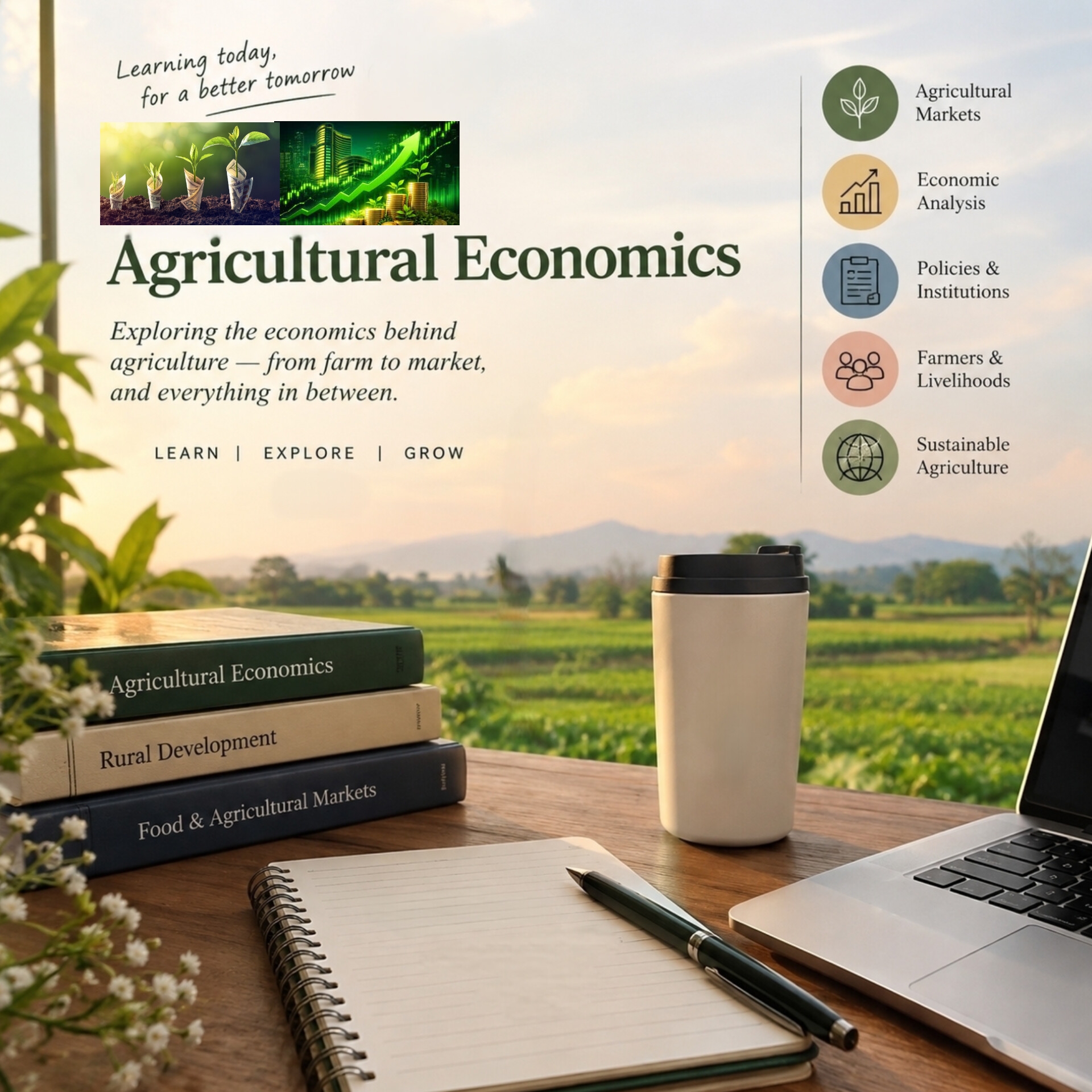
Agricultural economics🌾

Introduction to Agricultural Economics
Agricultural economics combines economic principles with agricultural practices to understand how resources can be allocated efficiently and how decisions influence production, income, markets, and rural development.
The major areas of agricultural economics include:
Production Economics: Production functions, laws of returns, and efficient resource allocation.
Farm Management: Farm planning, cost and return analysis, resource utilization, risk, and uncertainty.
Agricultural Finance: Agricultural credit, investment, and financial decision-making.
Agricultural Marketing: Marketing functions, channels, price determination, and market efficiency.
Demand and Supply: Consumer behaviour, market demand, supply conditions, and agricultural prices.
Agricultural Policy: Price policies, government interventions, institutions, and their impact on farmers and agriculture.
Rural Development: The economic conditions of farming communities and the contribution of agriculture to overall development.
Agricultural economics is important because it connects economic theory with practical agricultural decisions. It helps us understand how farmers allocate resources, manage risks, improve profitability, respond to market conditions, and adapt to government policies.
Agriculture is the field; economics is the lens through which we understand its decisions.
l