ECONOMICS – ITS SUBJECT MATTER
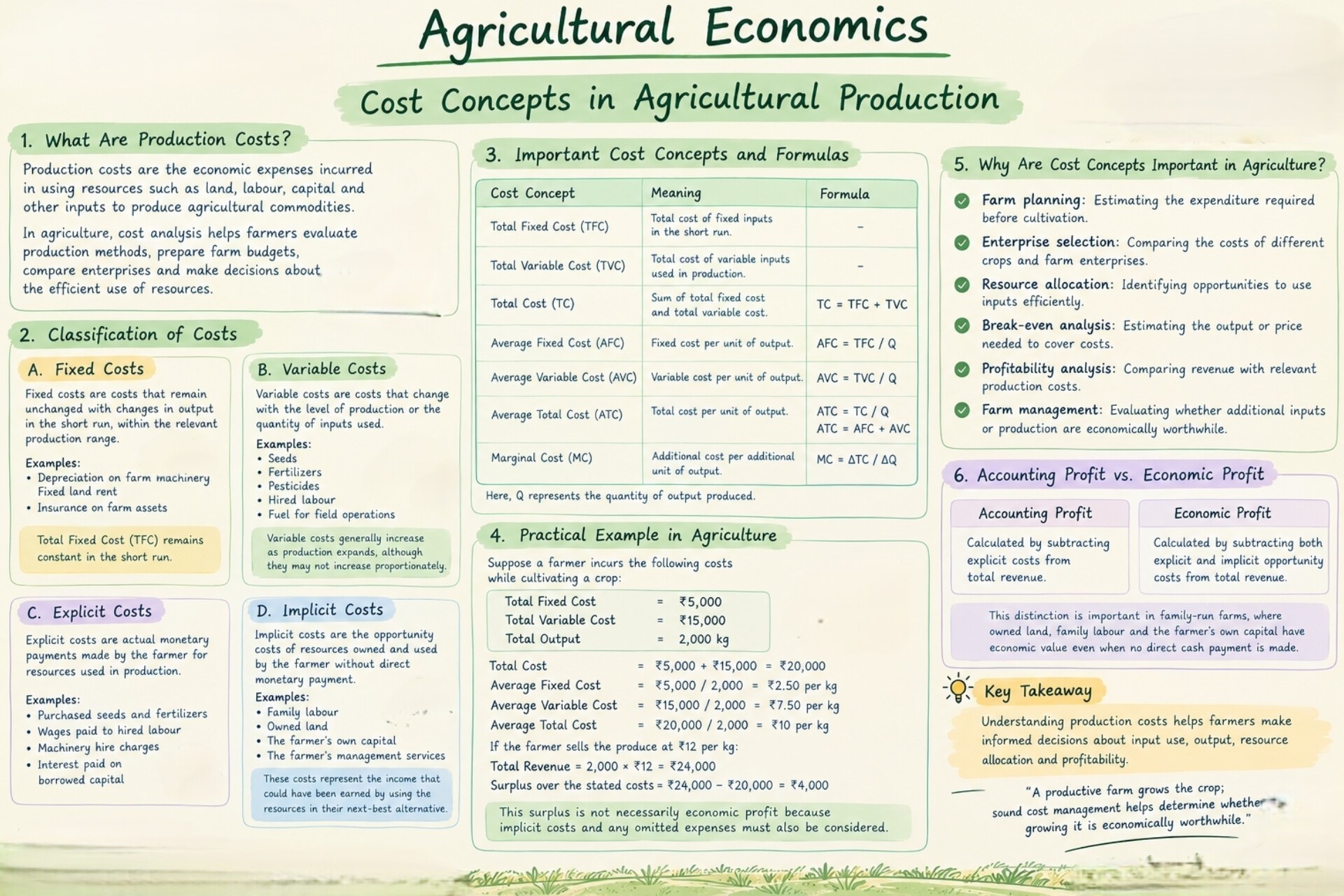
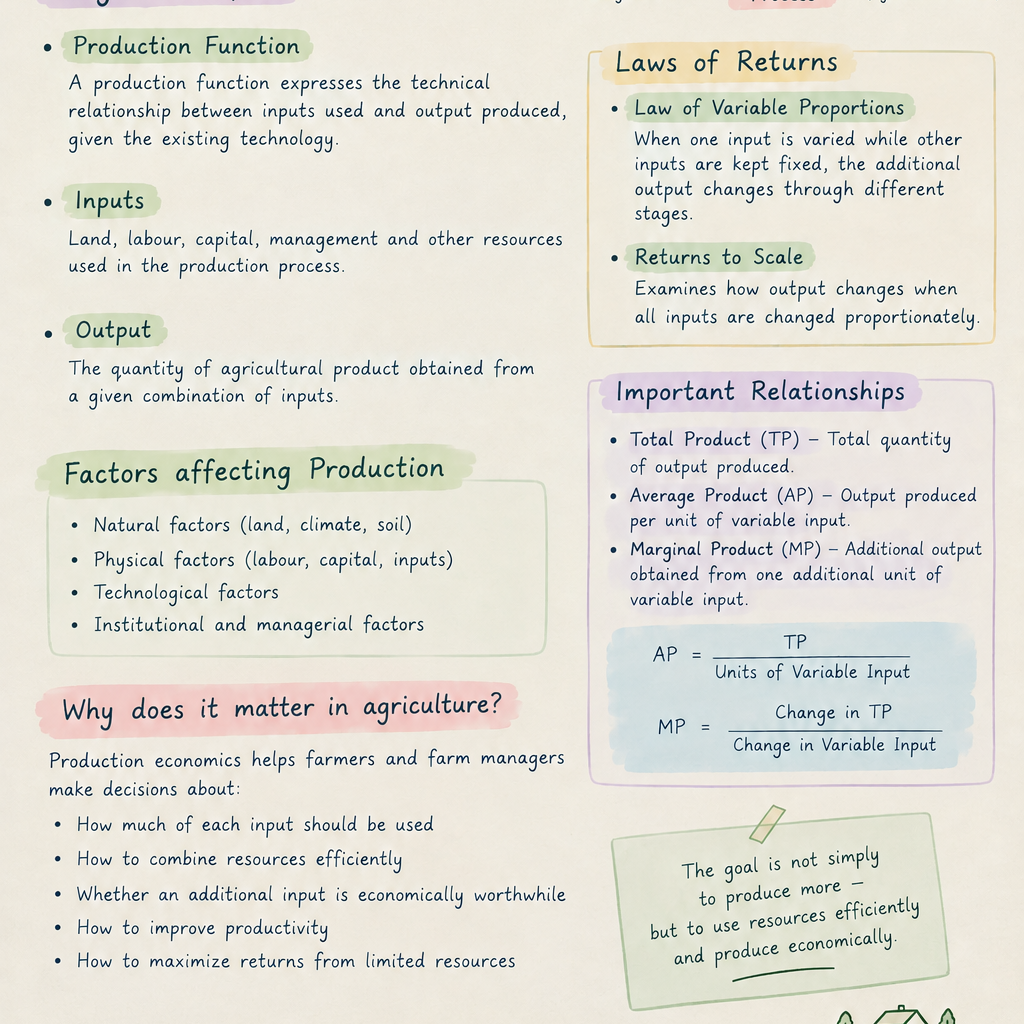
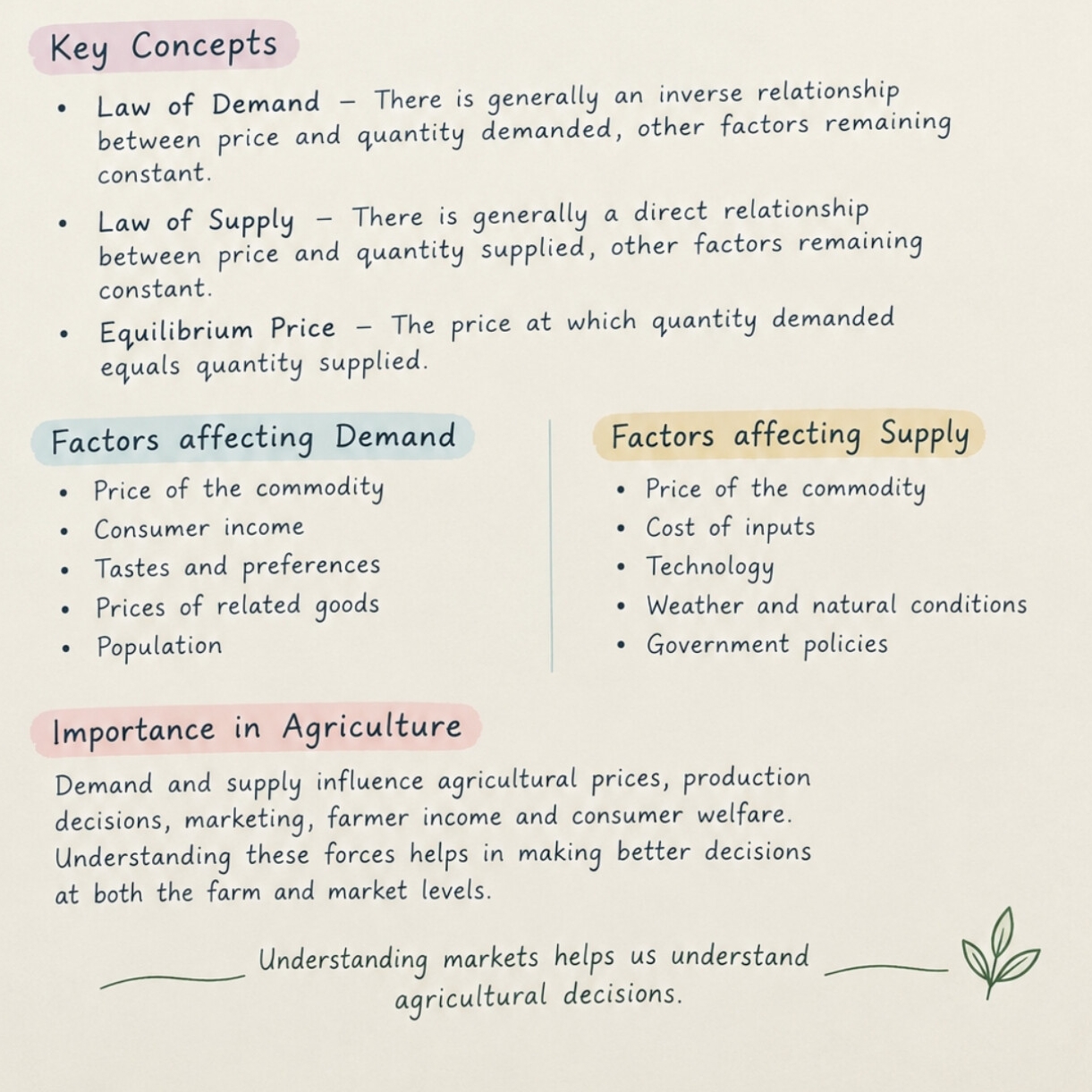
ECONOMICS – ITS SUBJECT MATTER ✓ Meaning of Economics Economics is a social science that studies how individuals and societies make choices regarding the allocation of scarce resources to satisfy unlimited human wants. It deals with the production, consumption and distribution of goods and services and examines how economic decisions influence individuals, businesses and society. ✓ Divisions of Economics Economics is broadly divided into two major branches: A. Microeconomics Microeconomics deals with the economic behaviour of individual units such as consumers, households, firms and industries. It studies: - Individual consumer behaviour - Demand and supply - Price determination - Production and costs - Market structures - Distribution of income Agricultural Example: Studying the demand for paddy, the cost of cultivation and the price received by an individual farmer. B. Macroeconomics Macroeconomics studies the economy as a whole and deals with aggregate economic variables. It studies: - National income - General price level - Inflation and unemployment - Economic growth - Money and banking - Public revenue and expenditure Agricultural Example: Analysing the contribution of agriculture to national income and the impact of inflation on agricultural input prices. ✓ Modern Approach to Economics The modern approach to economics focuses on the efficient allocation of scarce resources among competing uses to achieve maximum possible satisfaction and economic welfare. The central economic problem arises because: - Human wants are unlimited. - Resources are limited. - Resources have alternative uses. Therefore, individuals and societies must make choices regarding the allocation of available resources. ✓Definitions of Economics Economics has been explained through different approaches by prominent economists. A. Wealth Definition – Adam Smith Adam Smith, known as the Father of Economics, explained economics as the study of the nature and causes of the wealth of nations. This approach gives importance to wealth creation and economic development. B. Welfare Definition – Alfred Marshall Alfred Marshall considered economics as the study of mankind in the ordinary business of life, with particular emphasis on material welfare. This approach highlights the relationship between wealth and human welfare. C. Scarcity Definition – Lionel Robbins Lionel Robbins defined economics as the science that studies human behaviour as a relationship between ends and scarce means which have alternative uses. This definition emphasizes scarcity, choice and opportunity cost. D. Growth-Oriented Definition – Paul Samuelson Paul Samuelson emphasized how people and societies choose to use scarce productive resources to produce different commodities over time and distribute them for present and future consumption. This approach also considers economic growth and resource allocation. ✓Economics as a Social Science Economics is considered a social science because it studies human behaviour and interactions in relation to the production, consumption and distribution of resources. It examines how individuals, households, businesses and governments make economic decisions. ✓ Economics: Positive Science or Normative Science A. Positive Economics Positive economics deals with objective explanations of economic facts and relationships. Its statements can be examined using evidence. Example: An increase in the market price of a commodity may influence its quantity demanded. B. Normative Economics Normative economics deals with value judgements and opinions about what ought to happen in an economy. Example: The government should provide better price support to farmers to improve their income. ✓ Methods of Economic Investigation Economic investigation involves systematic methods of studying economic problems and relationships. A. Deductive Method The deductive method begins with general principles or assumptions and applies them to particular situations. It moves from general principles to specific conclusions. B. Inductive Method The inductive method begins with observations and specific facts and develops general principles or conclusions. It moves from specific observations to general conclusions. Both methods are useful in economic analysis and research. ✓ Economic Laws Economic laws are general statements that explain the relationships between different economic variables under specified conditions. They describe regular patterns of economic behaviour rather than absolute rules that apply without exception. Examples: - Law of Demand - Law of Supply - Law of Diminishing Marginal Utility - Law of Diminishing Returns Economic laws help economists understand and analyse economic activities and predict possible outcomes. APPLICATION IN AGRICULTURE Economics helps us understand how farmers make decisions regarding limited resources such as land, labour, capital and water. It provides a foundation for analysing agricultural production, input costs, market prices, consumer demand and farm income. Understanding economic principles is essential for improving resource allocation, farm efficiency and agricultural development. Economics is fundamentally the study of scarcity, choice and resource allocation. Its principles provide the foundation for understanding individual decisions as well as the functioning of the wider economy. "Every economic decision begins with a choice between alternative uses of limited resources." #AgriculturalEconomics #Microeconomics #Economics