
@gova_lit22181·Recent
Story3 min read
Drip irrigation
Drip irrigation system:
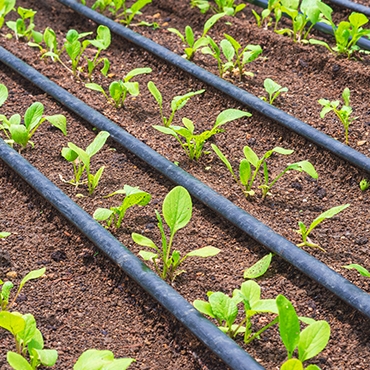
Drip irrigation system delivers water to the crop using a network of mainlines, sub-mains and lateral lines with emission points spaced along their lengths.
Each dripper/emitter, orifice supplies a measured, precisely controlled uniform application of water directly into the root zone of the plant.
Water enter the soil from the emitters, moving into the root zone of the plants through the combined forces of gravity and capillary. In this way, the plant’s withdrawal of moisture and nutrients are replenished almost immediately, ensuring that the plant never suffers from water stress, thus enhancing quality, its ability to achieve optimum growth and high yield.
Major Components of Drip Irrigation System
*Pump station takes water from the source and provides the right pressure for delivery into the pipe system.*Control valves control the discharge and pressure in the entire system.*Filtration system cleans the water. Common types of filter include screen filters and graded sand filters which remove fine material suspended in the water.*Mainlines, submains and laterals supply water from the control head into the fields. They are usually made from PVC or polyethylene hose and should be buried below ground because they easily degrade when exposed to direct solar radiation. Lateral pipes are usually 13-32 mm diameter.*Emitters or drippers are devices used to control the discharge of water from the lateral to the plants. They are usually spaced more than 1 metre apart with one or more emitters used for a single plant such as a tree. For row crops more closely spaced emitters may be used to wet a strip of soil. Many different emitter designs have been produced in recent years. The basis of design is to produce an emitter which will provide a specified constant discharge which does not vary much with pressure changes, and does not block easily.SUBSIDIES FOR DRIP IRRIGATION:*Farmers in India can receive a 55% to 100% subsidy for installing drip irrigation systems through central schemes like the Pradhan Mantri Krishi Sinchayee Yojana Per Drop More Crop) combined with state-level top-ups.*Small & Marginal Farmers: Receive up to 55% financial assistance under central norms, which can scale up to 100% with state horticulture or convergence schemes (such as in Tamil Nadu for specific categories/crops).
The most important techniques in Drip irrigation is fertigation.This is the process of applying fertilisers through the irrigation system.
0 remarks
Remarks & Intellectual Discussion (0)
No remarks yet. Be the first thinker to start the dialogue.