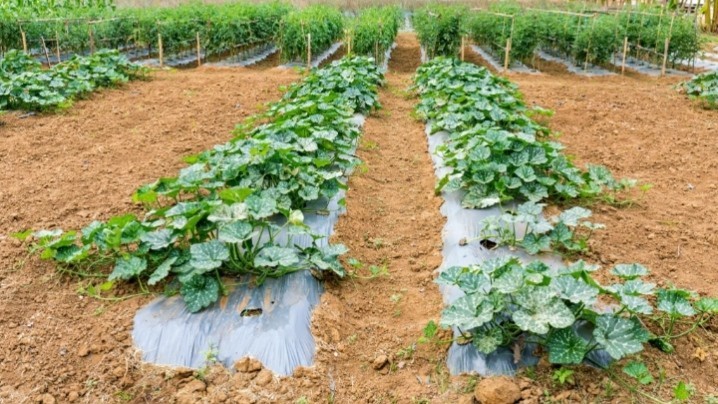
Modern farming
PAPER MULCHING
What is paper mulching?
Paper mulching involves covering the soil with specially prepared agricultural paper, usually around crop rows or planting beds. Small holes are made in the paper to plant seeds or seedlings. The paper gradually decomposes under suitable field conditions.
Methods of paper mulching
1. Soil preparation
Plough the field, remove weeds, and prepare raised beds or flat planting beds
2.Laying the paper
Spread suitable agricultural-grade biodegradable paper over the soil and secure its edges to prevent wind damage.
3. Planting and irrigation
Make holes in the paper and plant seedlings. Drip irrigation can be installed beneath the mulch.
4. Crop growth and decomposition
Monitor the crop, irrigation, and paper condition. After harvest, manage the remaining paper according to its biodegradability and product instructions.
Advantages
*Weed control: Blocks sunlight and suppresses weed growth.
*Moisture conservation: Reduces direct evaporation from the soil.
*Temperature regulation: Helps moderate soil temperature, especially in hot conditions.
*Environmental protection: Suitable biodegradable paper can reduce dependence on conventional plastic mulch.
*Crop productivity: May improve crop growth, yield, and quality when the material suits the crop and local conditions.
Limitations
*Agricultural-grade paper may cost more than ordinary plastic mulch.
*Paper can tear or deteriorate during heavy rain and strong winds.
*Installation may require additional labour.
*Decomposition depends on paper quality, moisture, and climate.
*Printed, coated, or chemically treated paper should not be used unless it is confirmed safe for agricultural soil.